HKCO
Hong Kong Chinese Orchestra Environmental, Social and Governance Artistic Director and Principal Conductor for Life Orchestra Members Council Advisors & Artistic Advisors Council Members Management Team Vacancy Contact Us (Tel: 3185 1600)
Concerts
Education
The HKCO Orchestral Academy Hong Kong Youth Zheng Ensemble Hong Kong Young Chinese Orchestra Music Courses Chinese Music Conducting 賽馬會中國音樂教育及推廣計劃 Chinese Music Talent Training Scheme HKJC Chinese Music 360 The International Drum Graded Exam

Instrument R&D
Eco-Huqins Chinese Instruments Standard Orchestra Instrument Range Chart and Page Format of the Full Score Configuration of the Orchestra

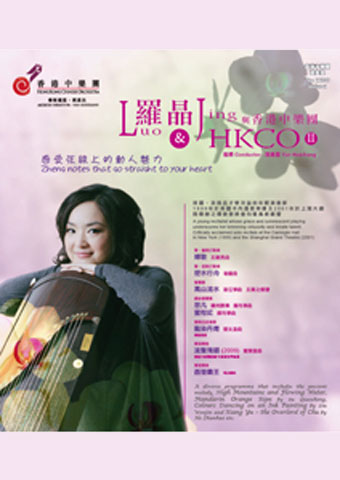
Luo Jing & HKCO II
8:00pm
High Mountains and Flowing Water
Zhejiang Zheng Music Transcribed by Wang Xunzhi
Zheng, Sheng and Percussion
Ni Shui Xing Chuan (Sailing Against the Current)
Robert Zollitsch
Sheng: Chen Yiwei Percussion: Gao Shan
Zheng, Xiao and Percussion
Song of Diao Chan
Wang Jianmin
Xiao: Choo Boon-chong Percussion: Gao Shan
Steel-wire Zheng Solo
Thoughts of Unfrocking
String Poem in Chiu Chow Music Su Qiaozheng
Arr. by Zhou Chenglong
Percussion: Ronald Chin
Steel-wire Zheng Solo
Mandarin Orange Ripe
Su Qiaozheng
Zheng and Bowed-strings
Colours Dancing on an Ink Painting
Liu Wenjin (Hong Kong Premiere)
Zheng Concerto
The Music is but Momentary (Consolation)
Richard Tsang
(Arrangement Commissioned by the HKCO /
World Premiere of the Chinese Orchestral Version)
Zheng Concerto
Xiang Yu – the Overlord of Chu
He Zhanhao
The Rich and Colourful World of Zheng Music
Chow Fan-fuOne can say that this upcoming concert is a showcase of the rich possibilities of zheng music today and a collage of vibrant colours created over centuries of development.
Among traditional Chinese musical instruments, the zheng (also referred to as guzheng) is probably the most popular. Interest in learning to play the instrument, just like the sales figure of the instrument, tops all other instruments in Hong Kong. Zheng music is able to break from any restraints to build an eclectic repertoire. This is demonstrated in the eight zheng pieces featured in this concert, which are different in form and timbre.
Wang Jianmin’s Song of Diao Chan is an ensemble where the zheng is accompanied by the bamboo flute, xiao, and percussion. Robert Zollitsch’s Nishui Xingchuan (‘Sailing Against the Current’) is a zheng concerto with the sheng (reed pipe mouth organ) and percussion. Colours Dancing on an Ink Painting, a concerto by Liu Wenjin, is performed with Chinese bowed-string instruments, led by the huqin and accompanied by the Chinese orchestra. Richard Tsang’s orchestral work, The Music Is but Momentary (Consolation), is arranged for this concert and for the first time includes the guzheng. He Zhanhao’s Xiang Yu – the Overlord of Chu was written specially for the zheng.
Completing the concert programme are three zheng solos, each presenting a different timbre and hue. They are High Mountains and Flowing Water on the silk-string zheng; Mandarin Orange Ripe on the steel-string zheng; and Thoughts of Unfrocking, which although is also performed on the steel-string zheng, nevertheless evokes a different mood with the addition of percussion instruments like muyu (wood blocks) and yinqing (chimes).
From this repertoire of eight arrangements alone, one can already appreciate the distinct diversity of the zheng. How then can we actually immerse ourselves in this wondrous soundscape?
Perhaps one can approach it in the following three ways. First, the title of each of these eight selected zheng pieces actually provides a clear navigation of how the music is to be enjoyed. But this approach may not quite lead to the core of the world of zheng music. Secondly, the listener can attempt to understand zheng music through the nuances in the melodic and stylistic characteristics, as well as the fingering and performance techniques typical of the various zheng schools. Although zheng music today tends not to emphasize the stylistic schools but adopts a more integrated approach, knowing how to distinguish the characteristic traits of the different styles is a key to the world of the zheng.
Having said that, the ‘sounds’ of music and the styles of different zheng schools are in fact rather abstract concepts. To consider them together with the more ‘concrete’ such as ‘programme music’ requires the listener to draw on both sense and sensibilities, and perhaps more the latter than the former. This third approach is one of the most important keys to appreciating music. It is difficult to rationally or logically analyze a musical experience because there are complex factors involved. The same music that appeals to one can be totally ineffective on another. Herein therefore lies the attractiveness of music appreciation. To illustrate the point, Xiang Yu – the Overlord of Chu is a composition which incorporates very specific content and plot; yet, to fully appreciate the protean attributes of the music, one has to feel them emotionally rather than to think about them rationally.
In any event, having a better understanding of the three areas mentioned will doubtless pave the way for the journey to the centre of the varied and interesting world of zheng music, allowing an even more pleasant and satisfying experience to be derived from browsing each colourful musical collage.
Luo Jing shared her childhood
Ta Kung Pao (10-March-2012)
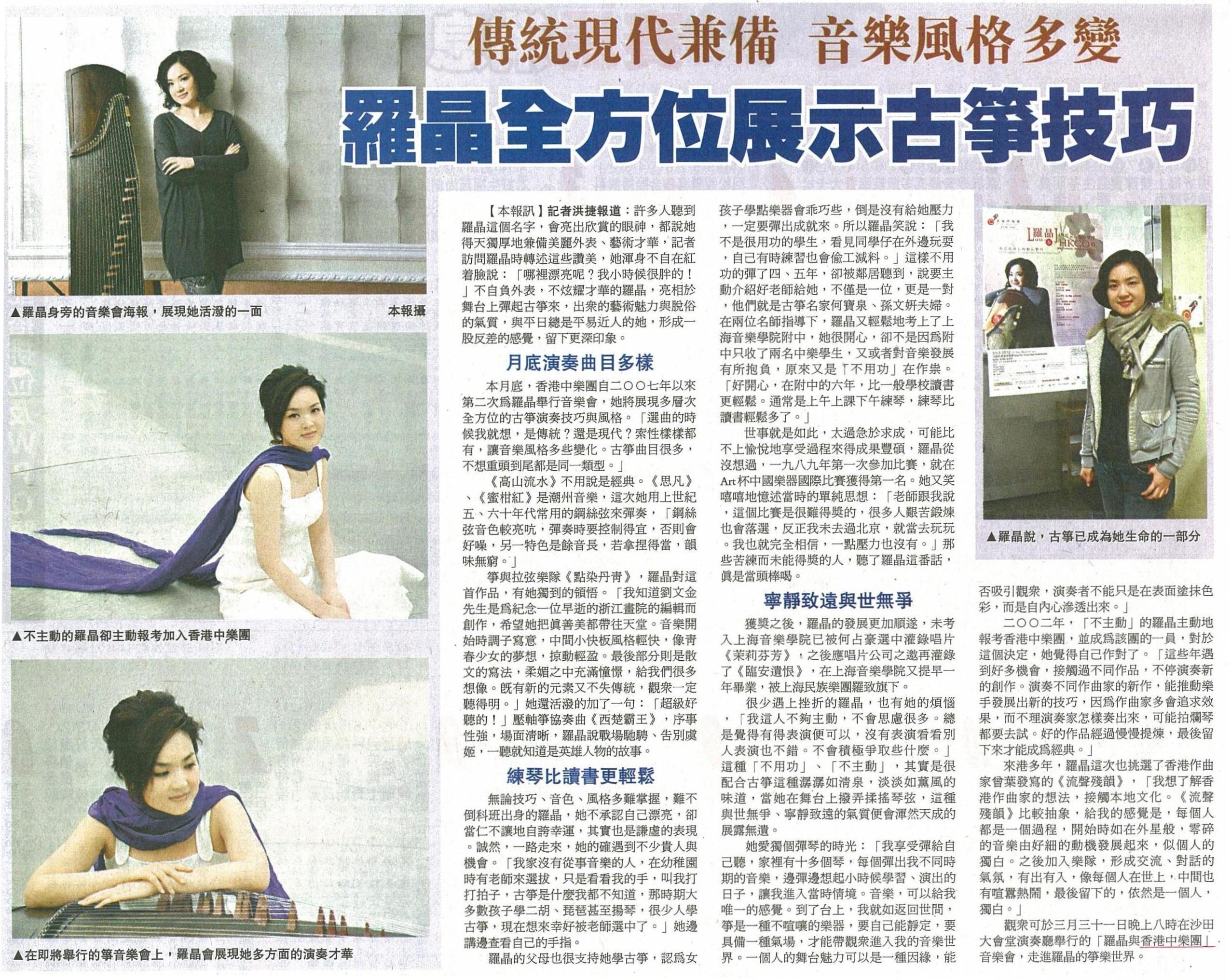
Inteview with Luo Jing, shared her music view
Hong Kong Opera Preview (March-2012)
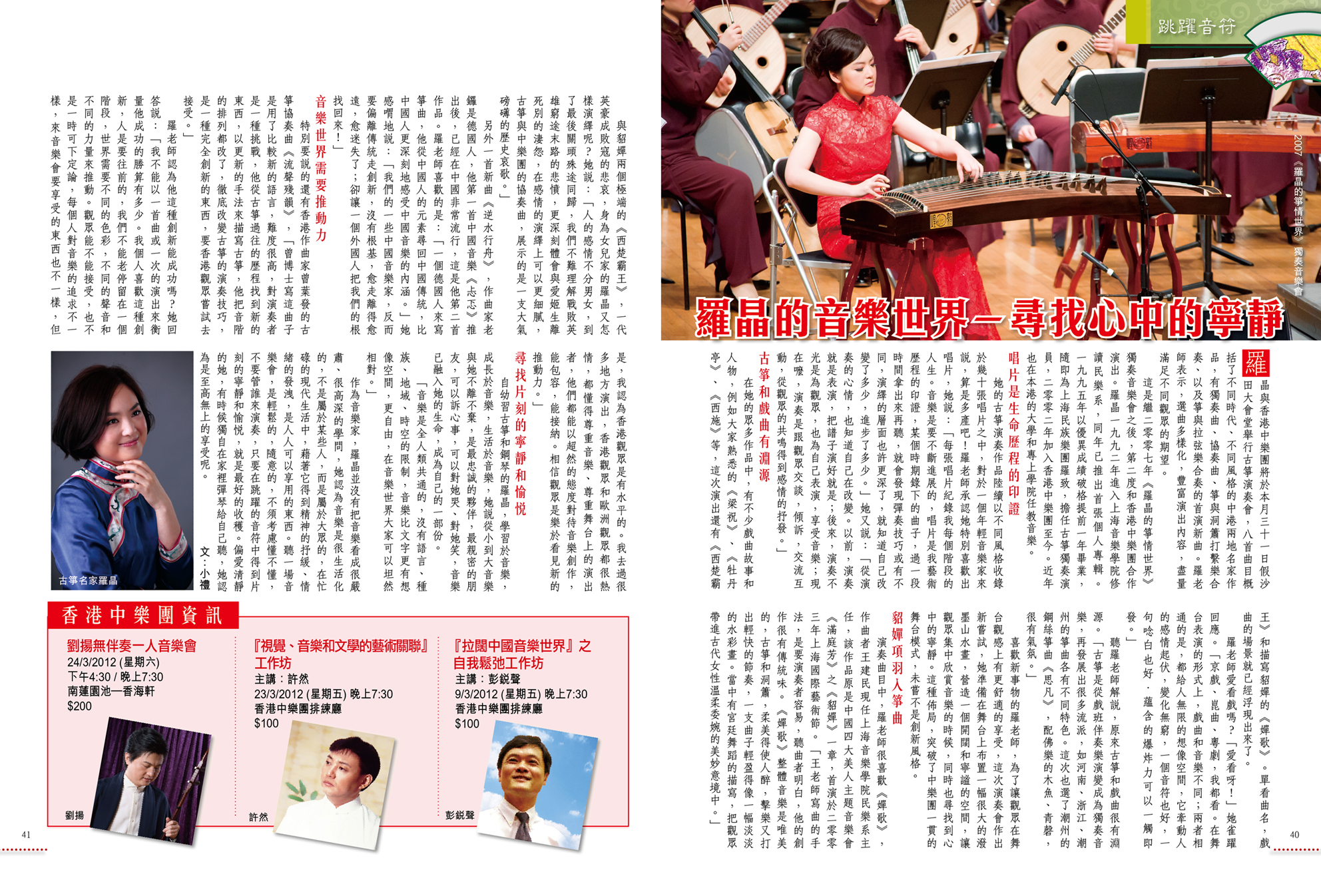
Luo Jing: "To present the diversity of Zheng."
U-magazine 16.03.2012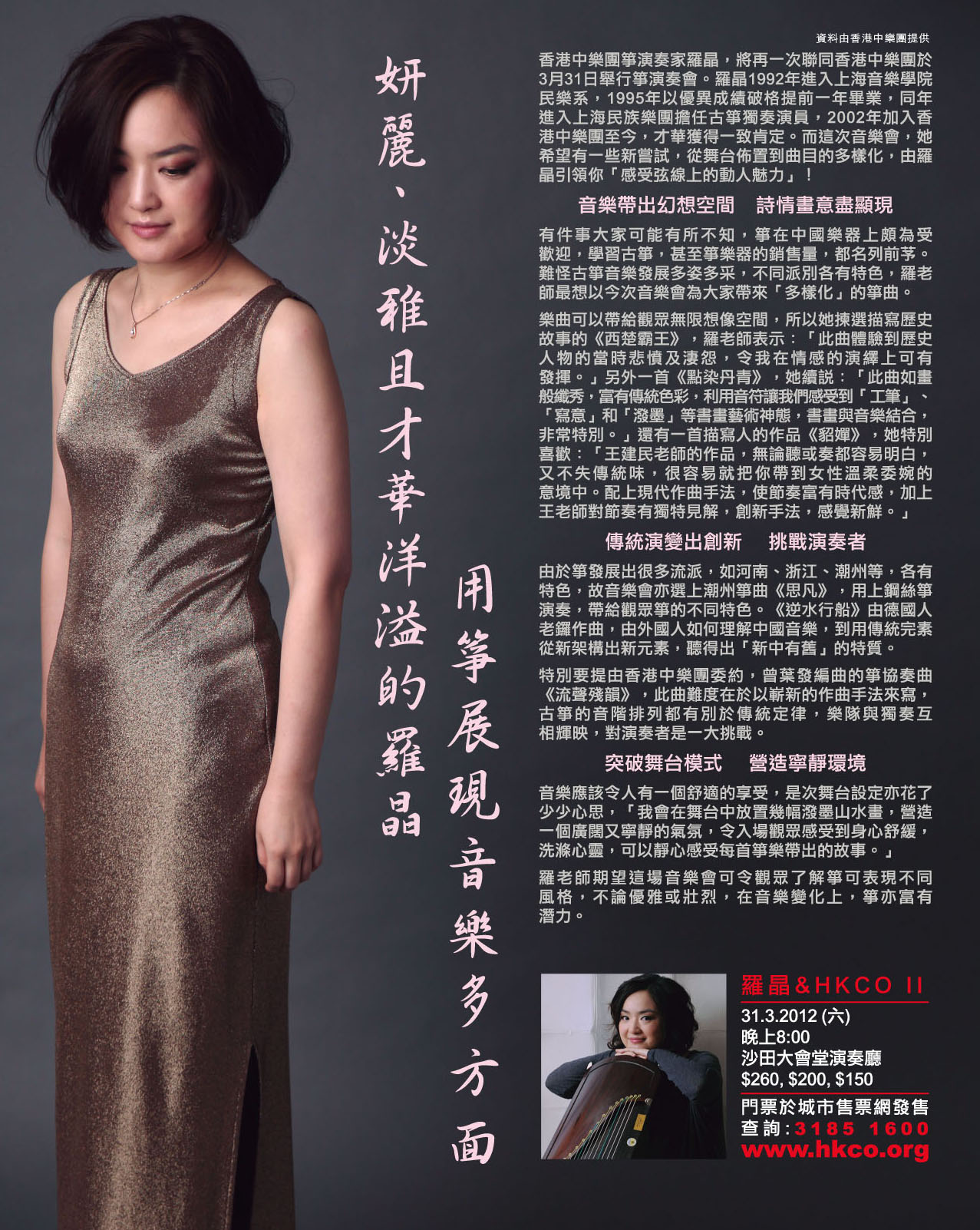
An oasis in a desert
Hong Kong Commercial Daily (27.03.2012)