Why the theatre and the concert hall?
Chow Fan-fu
Programming for an educational concert needs to take into consideration a number of factors. Besides the educational front, due consideration must be given to the scope of the music and the duration of the performance. Protracted sessions are to be avoided, the reason being the shorter attention span of fledgeling audiences. It is unlikely that novice listeners, who have little or no prior exposure to art music, can devote their attention to the music for an extended period of time. At the same time, the compositions selected should not be too ambitious, too intense or too abstruse, so that the audience can relate more easily to the music. There should also be other arrangements for educational concerts, such as having a programme host for guided listening or to liven up the mood to enhance audience participation.
Yet, for better results, educational concerts should be held at venues that meet prescribed standards, such as studios, theatres and concert halls. While it is true that holding an outreach concert in a school hall, a social centre or a community hall means that students and residents can attend the function in an environment they feel at ease and saves time and travel, the effectiveness of imparting music knowledge would be reduced.
The purpose of educational concerts is to channel an audience’s music preference from the common, mass-market popular genre to the richer, deeper and more refined substance of art music through a heightened level of musical appreciation. Art music is significantly different in terms of dynamics, texture, tone and colour. At venues where the acoustics are less than optimal, it is practically impossible to communicate the full erudite effect of art music. Sometimes, where sound insulation is inadequate, noises from the surroundings actually can disrupt and spoil the effect, just like an exquisite painting being ruined by unwanted ink splashes.
The consequence of holding educational concerts at schools, social centres and community halls with sub-standard soundproofing is that undesirable ambient noise hugely compromises the musical effects, and deprives the audience of experiencing the total sonic spectrum. The finer registers are lost. The intensity of crescendos is diminished. The audience is left virtually with a blemished or damaged piece of art.
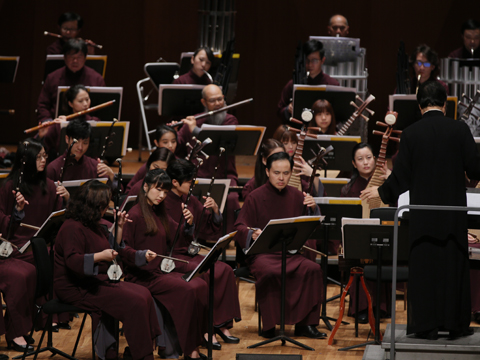
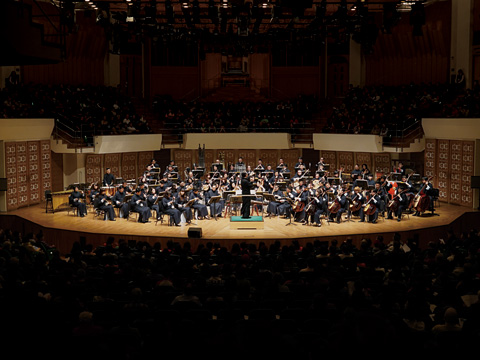
Using a theatre or concert hall where conditions comply with required specifications to stage a concert not only preserves the integrity of the music; the audience is also able to focus their undivided attention on the music, without any external disturbance. The unique ambience within a theatre or concert hall helps create the mood for the event, an outcome which is usually difficult to reproduce in a school, social centre or community hall. As such, putting on educational concerts at substandard locations is tantamount to wasting resources.
While indeed holding an educational concert at a theatre or concert hall would incur a much higher venue rental, thereby inflating the costs, yet everything considered, it is still a worthwhile, viable option, and the organiser cannot but accept that increased costs and higher prices are a necessary part of educational concerts and have to be dealt with head on.